The Danger of a Single Story
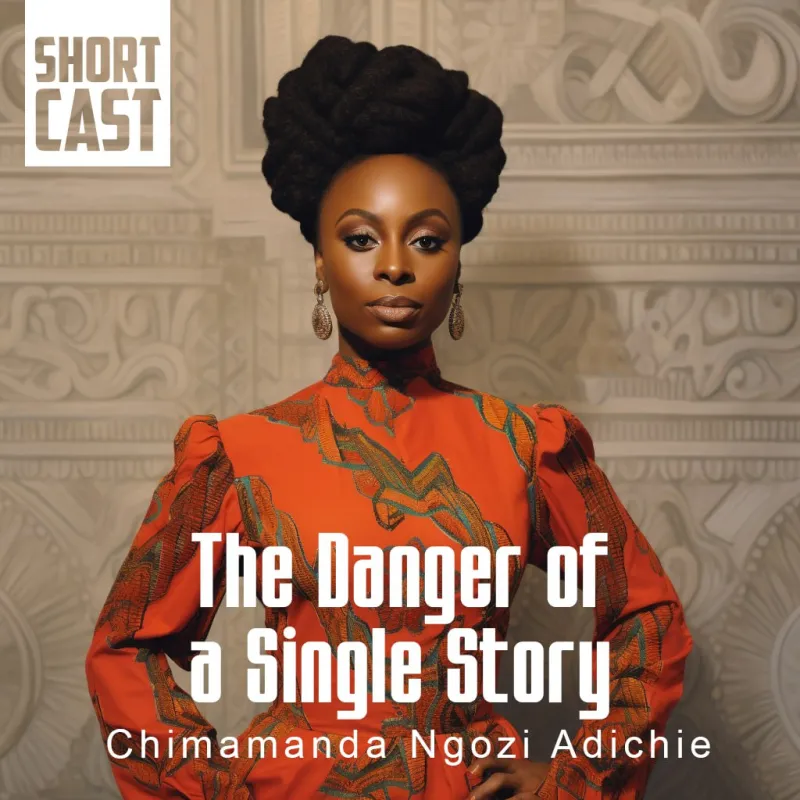
Welcome back, incredible BookDuck fans. Do you often make assumptions about things by hearing just one story? I am sure many of us do, but it is not the best choice because a single story can highlight some things and exclude many other things. It is unfair to judge based on a single story because that's how stereotypes and generalizations are often created. Let's hear a TED talk by Chimanda Ngozi Adichie, whereby recounting her personal experiences, she talks about the danger of the single story.
Adichie begins her talk by discussing her experiences growing up in eastern Nigeria. She remembers her childhood when she read many books where the characters were foreigners. This made her convinced that books had to have foreigners in them, and they had things that she could not personally identify with. She says things switched, though, when she discovered African books. But, there weren't many of them available, and they weren't as easy to find as the foreign books. She says she went through a mental shift in her perception of literature thanks to writers like Chinua Achebe and Camara Laye.
Because of them, she realized that people like her, girls who have chocolate skin color and kinky hair, could also exist in literature. So she started to write about things that she recognized. Now, she confesses that she loved American and British books she read, and they helped stir her imagination. But their unintended consequence was that she didn't know that people like her could exist in literature.
Next, she speaks about what the discovery of African writers did for her.
It saved her from having a single story of what books are. She comes from a conventional, middle-class Nigerian family, her father was a professor, and her mother was an administrator. So, they would get live-in domestic help from nearby rural villages. When she turned eight, they got a new house boy. His name was Fide. The only thing her mother told them about Fide was that his family was very poor. Her mother sent their old clothes and some goodies to his family.
Another thing her mother would say when Adichie would not finish her food was, "Finish your food! Don't you know? People like Fide's family have nothing." This is something we all hear very often. This saying made Adichie have enormous pity for Fide's family.
One Saturday, they visited his village and saw a beautifully patterned basket made of dyed raffia that his brother had made. Adichie was startled, and it had not occurred to her that anybody in his family could make something. All she heard about them was how poor they were, so she could not see them as anything but poor. Their poverty was her single story of them.
She skips ahead to years later when she left Nigeria to study in the United States. She was 19 at the time. She says her American roommate was shocked by her. She asked Adichie where she had learned to speak English so well. She confused her roommate when she said Nigeria had English as its official language.
What struck Adichie the most was that her roommate felt sorry for her even before they saw each other. As you can guess, her default position toward Adichie as an African was a pity. Her roommate had a single story of Africa, a single story of catastrophe. In this single story, Africans could not be similar to her in any way. No possibility of feelings more complex than pity, and unfortunately, no possibility of a connection as human equals.
Adichie admits that before she went to the U.S., she didn't consciously identify as African. But in the U.S., people turned to her immediately when Africa came up. But she opens up about coming to embrace her identity. In many ways, she thinks of herself now as an African.
So, after she had spent some years in the U.S. as an African, she began to understand her roommate’s response to her. She says if she had not grown up in Nigeria, and if all she knew about Africa were from popular images, she too would think that Africa was a place of beautiful landscapes, animals, incomprehensible people dying of poverty and AIDS, unable to speak for themselves and most importantly waiting to be saved by a kind, white foreigner. She would see Africans in the same way that she saw Fide’s family as a child.
She believes this single story of Africa ultimately comes from Western literature. And so, she realized that her American roommate must have seen and heard different versions of this single story throughout her life. Adichie also recalls her professor being this way because he told her that her novel was not "authentically African ."She explains how she was willing to contend that there were several things wrong with the novel and that it failed in several places. Still, she struggled to imagine that it had failed to achieve African authenticity. She didn't even know what that was. To her questions, the professor responded that her characters were too much like him, an educated middle-class man who drove cars and they were not starving. Therefore they were not authentically African.
But she, too, admits that she has been guilty of buying into a single story. Hers was the story of Mexican immigrants. She confesses that there was a time when she saw them as hopeless immigrants and how she bought into that single story of them. She also admits that she could not have been more ashamed of herself.
So that is how to create a single story and how they are being created. Showing people as only one thing, over and over again, is what they become. It is impossible to talk about a single story without talking about power. Power is the ability not just to tell another person's story but to make it the definitive story of that person.
She then mentions how she learned a few years back that writers were expected to have had unhappy childhoods to succeed. She says she had a happy childhood but then realizes that she has experienced other things, such as her grandfather's death in refugee camps, inadequate healthcare, and devalued education. All of these stories make her who she is. But to insist on only these negative stories is to flatten her experience and overlook the many other stories that formed her.
The single story creates stereotypes; the problem with stereotypes is not that they are untrue but incomplete. They make one story become the only story. Of course, Africa is a continent full of catastrophes: immense ones such as horrific rapes, but other stories are not about catastrophes. And it is just as important to talk about them. The consequence of the single story is that it robs people of dignity, makes their recognition of their equal humanity difficult, and emphasizes how they are different rather than similar.
She ends her talk by being proud of where she comes from because even though their infrastructure failed, the government failed; she says by the incredible resilience of people, they thrive despite the government.
To sum up, the takeaway from Adichies' TED talk is that stories matter. Many stories matter, they have been used to dispossess and to malign, but they can also be used to empower and to humanize. Stories can break people's dignity but can also repair that broken dignity. And let's end with this thought: when we reject the single story and realize that there is never a single story about any place, then we regain a kind of paradise.